
Case study · Business systems
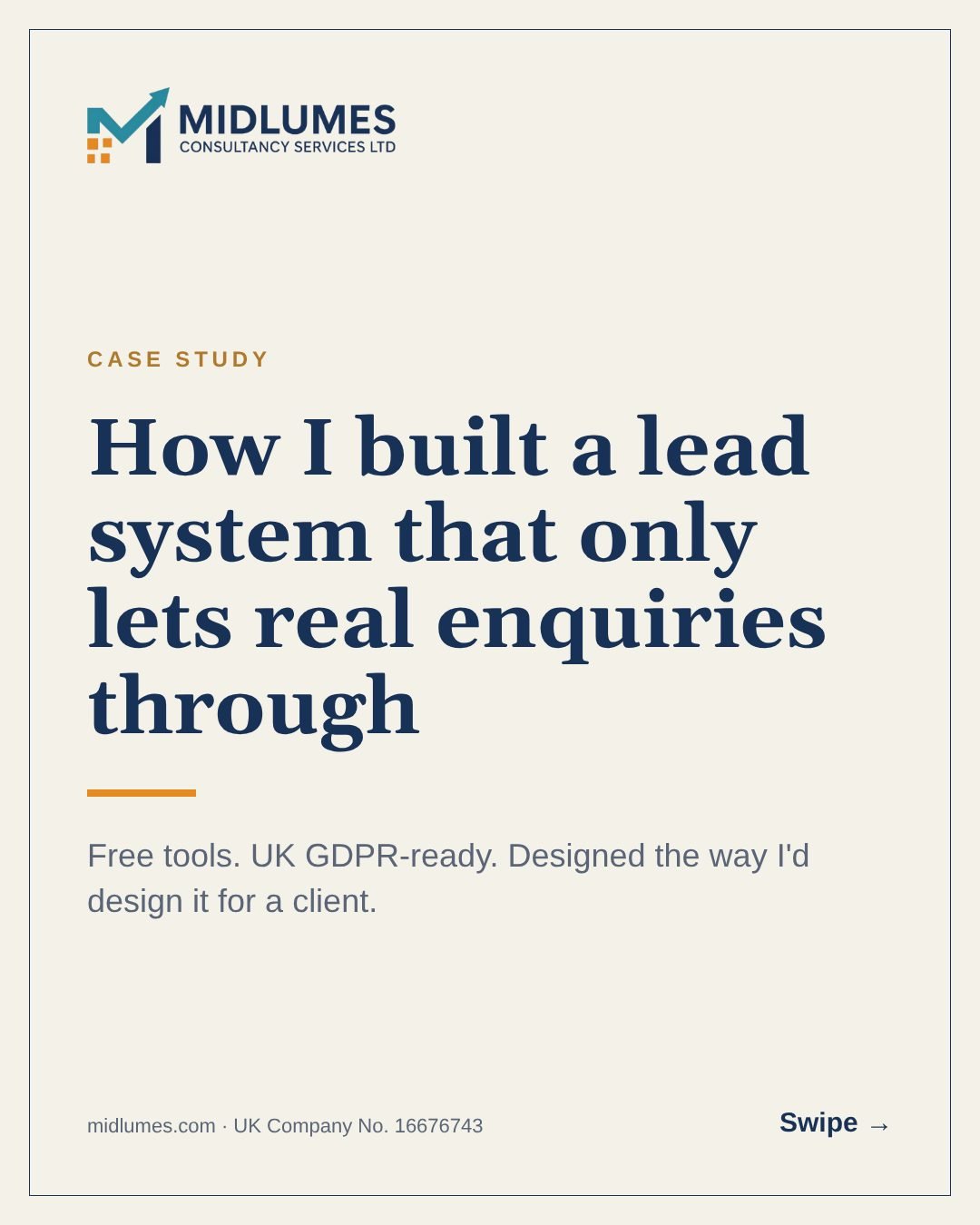
How I built a lead system that only lets real enquiries through
Free tools, UK GDPR-ready, and designed the way I would design it for a client. Here is the process, step by step.
The problem: enquiries that leak
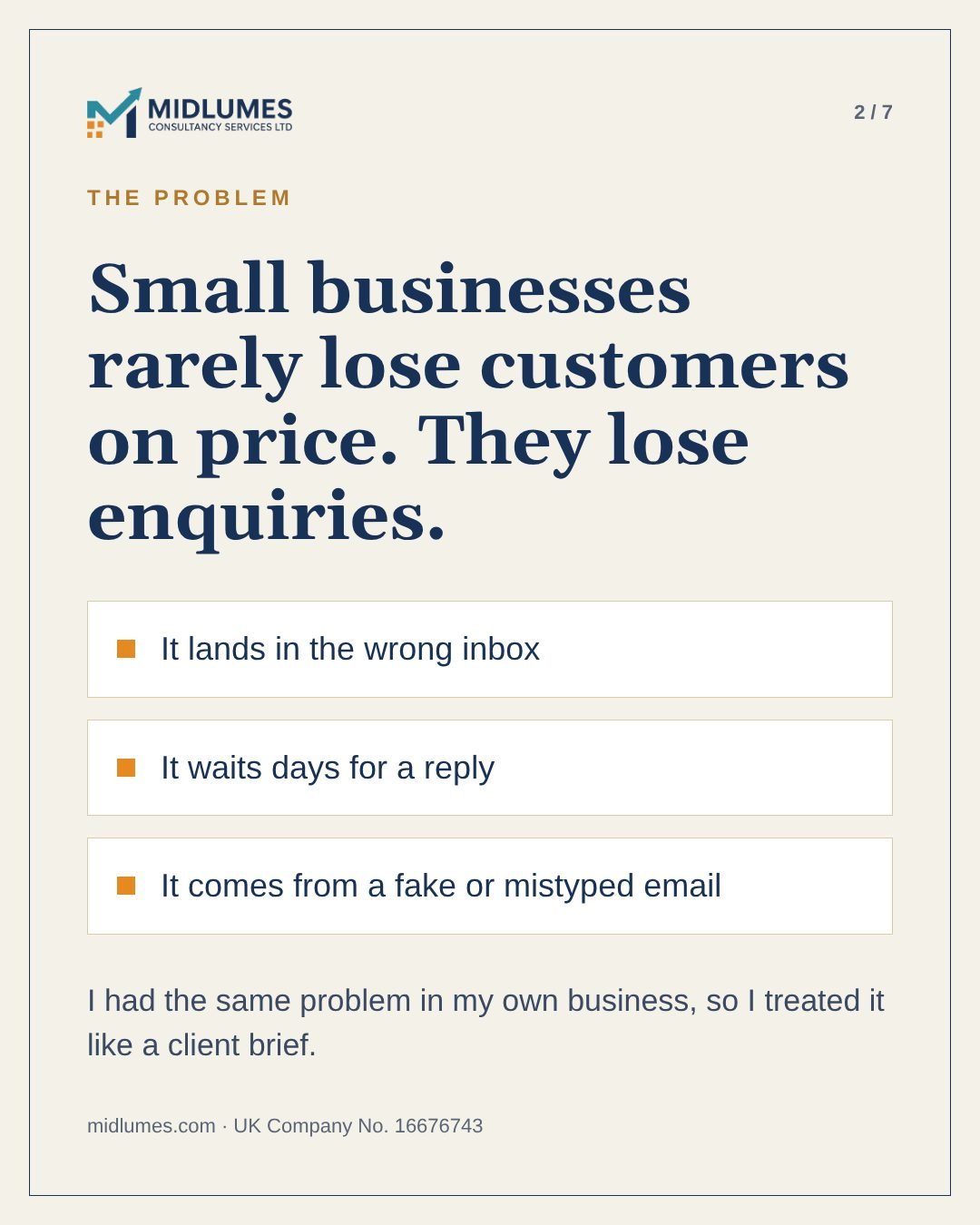
Most small businesses don't lose customers because of price. They lose them because an enquiry lands in the wrong inbox, waits days for a reply, or comes from a fake address that wastes everyone's time.
When I set up Midlumes Consultancy Services, I had the same problem to solve. Before writing any code, I treated it the way I would for a client: as a business process, not a website.
Step 1: Requirements before code
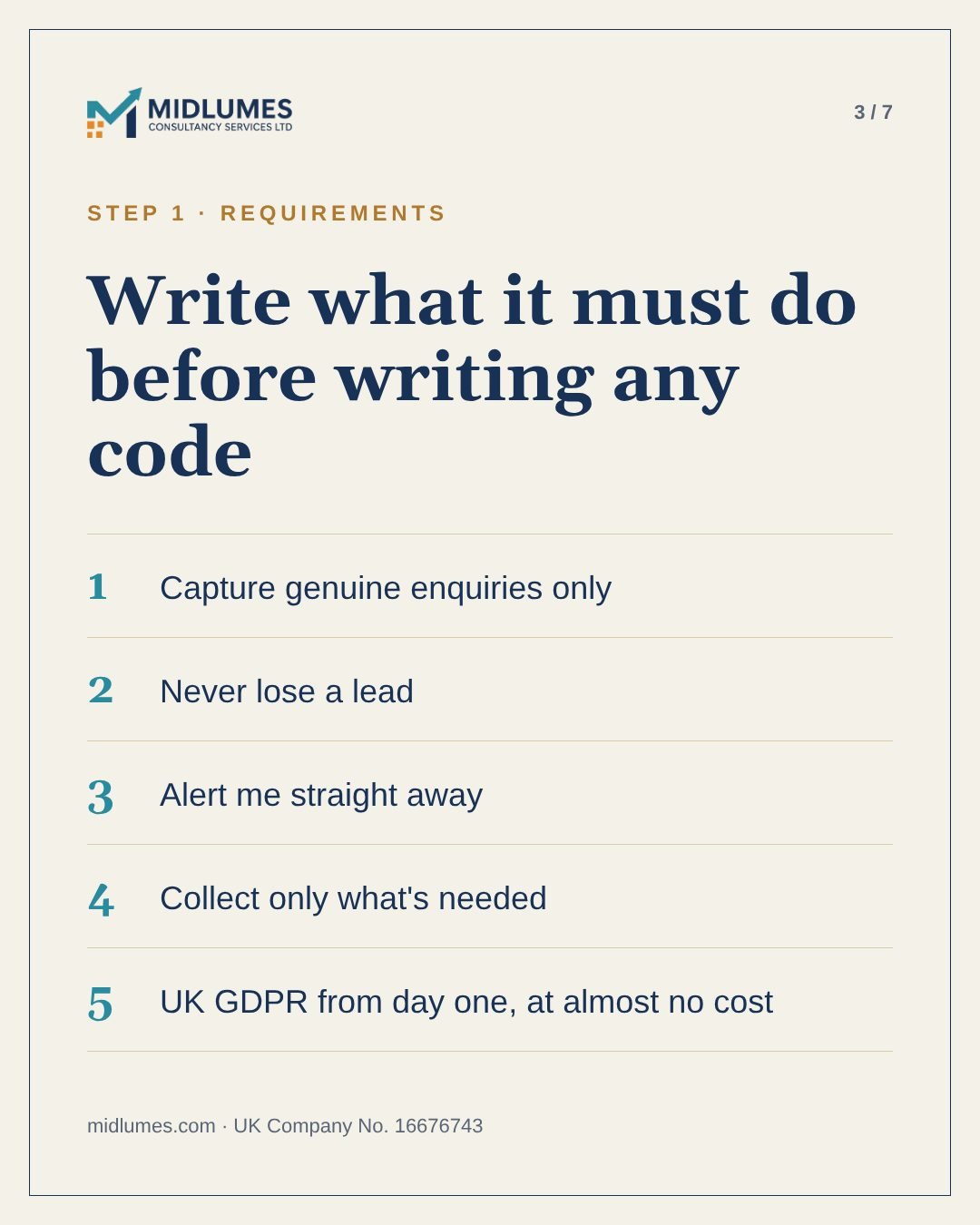
I wrote down what the system had to do, in plain language, as I would in a discovery session:
- Capture genuine enquiries only. No fake emails and no spam in the inbox.
- Never lose a lead. Every enquiry is stored in one place.
- Alert me straight away, so I can reply the same day.
- Collect only what's needed: name, contact details, area of interest and a short message.
- Follow UK GDPR from day one, at almost no running cost.
Step 2: How the enquiry flow works
- Visitor fills in a short form
- One-time code sent to their email
- Code correct? No: re-enter or resend the code Yes
- Server checks the input
- Saved to one lead sheet
- Instant email alert
- Reply the same day
A visitor fills in a short form and gets a 6-digit code by email. Only a confirmed code lets the enquiry through, so fake and mistyped addresses stop there. The server then checks the details again, saves the enquiry in one Google Sheet and sends me an alert.
A few small safeguards do a lot of work:
- The code expires after 10 minutes, and wrong guesses are limited.
- The number of codes one email address can request each hour is capped, which stops abuse.
- Every value is length-limited before it reaches the sheet, and text that could run as a spreadsheet formula is neutralised.
- Details shown in the email alert are escaped, so nobody can inject code through the form.
Step 3: Data protection built in
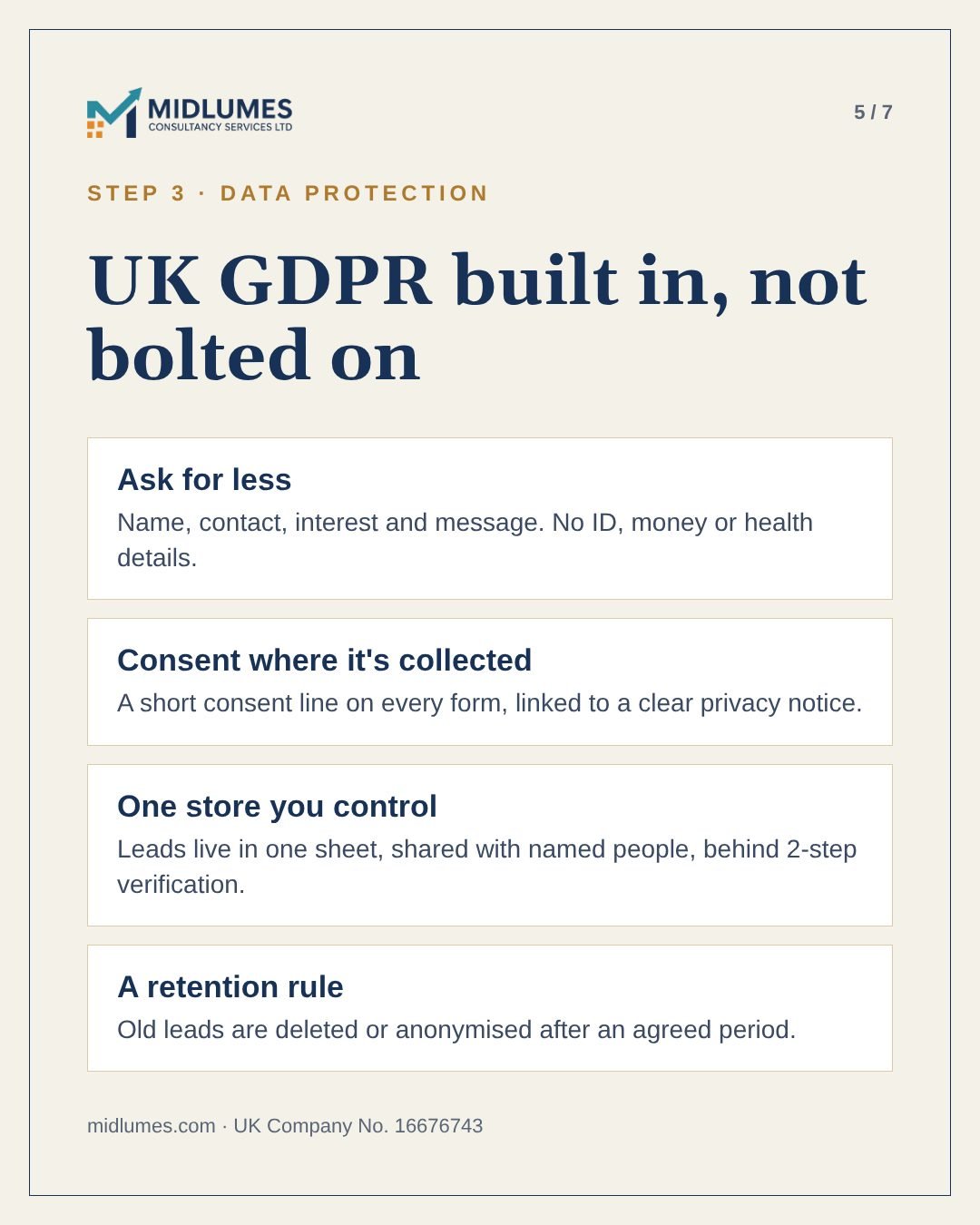
A lead system holds personal data, so I designed the safeguards in rather than adding them later:
- Ask for less: no ID, financial or health details through the website.
- Consent where it's collected: every form has a consent tick box linked to the privacy policy.
- One store: enquiries live in a single sheet, not scattered across inboxes.
- A retention rule: enquiries that don't become clients are kept for 24 months from the last contact.
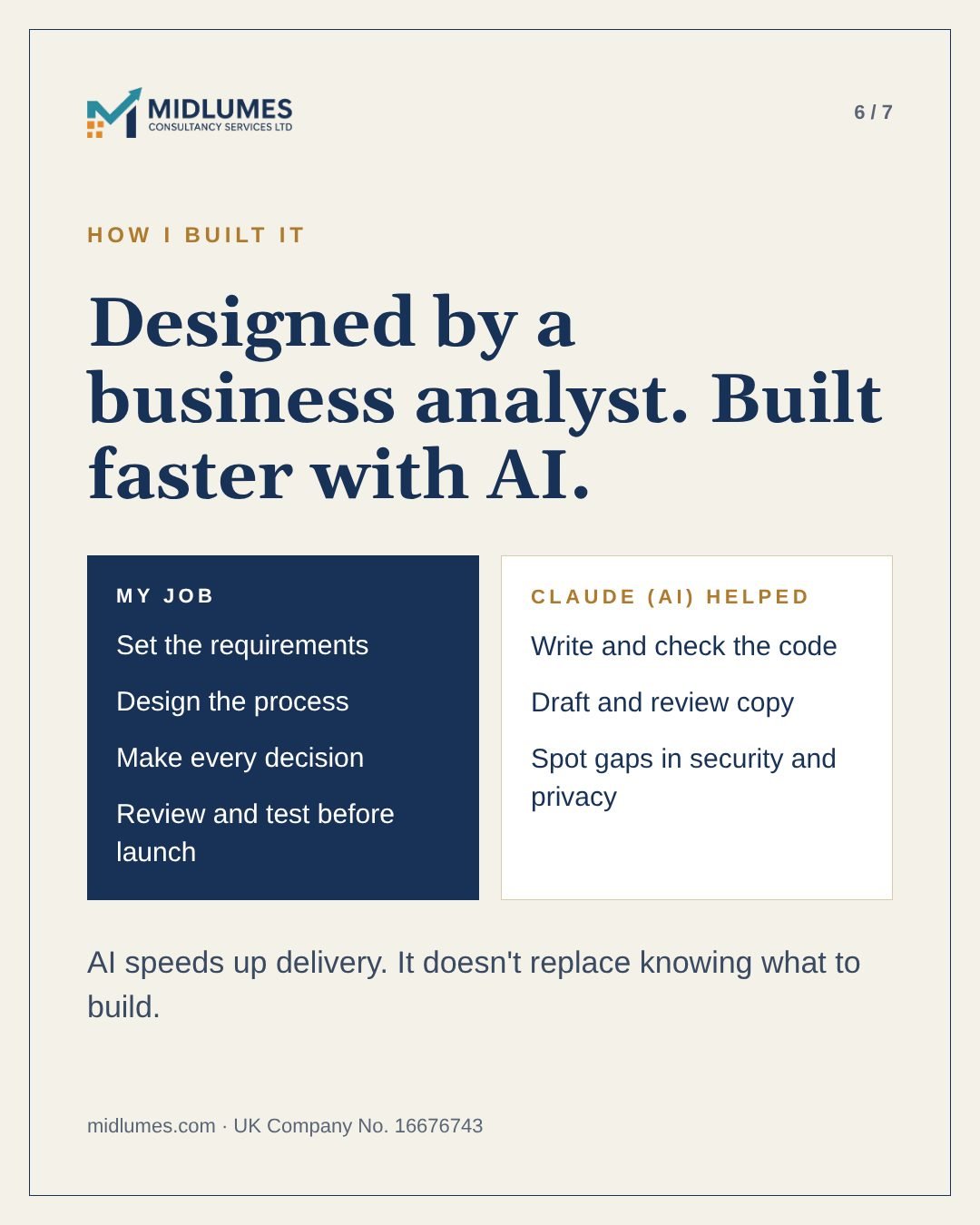
How I built it: a business analyst, with AI
I set the requirements, designed the process, made every decision, and reviewed and tested the result before launch. I used Claude, an AI assistant, to help write and check the code, draft and review copy, and spot gaps in security and privacy.
That combination is the real lesson. AI speeds up delivery, but it doesn't replace knowing what to build and why.
What this means for your business
The same pattern works for a trades business in Kent, a clinic in Riyadh, a coaching practice in Dubai or a trader in Delhi. The tools change; the process doesn't:
- Decide what a good enquiry looks like.
- Capture only that, with consent.
- Store it in one place you control.
- Get alerted fast, and track every lead to a reply.
Are enquiries slipping through the cracks?
In a free 20-minute call, I'll map your lead process and show you where it leaks. You leave with at least one fix you can make this week.
Book a free health check